
What is E-E-A-T and Why Should You Care?
Oh cool, another techogibberish acronym to fold into our vocabulary…
I mean, how many ALL CAPS non-words do we need? Apparently a gajillion, and more will come as the internet evolves.
In this post, I try to break down the meaning of E-E-A-T.
(formerly just E-A-T, but why not throw in another letter to mix it up?) Google recently added “Experience” to the concept, and they’re not wrong. How we experience a website has just as much importance the other factors.
As Google explains, E-E-A-T content has a “high level of Experience, Expertise, Authoritativeness, and Trustworthiness.”
How to get better at “E-E-A-T”ing
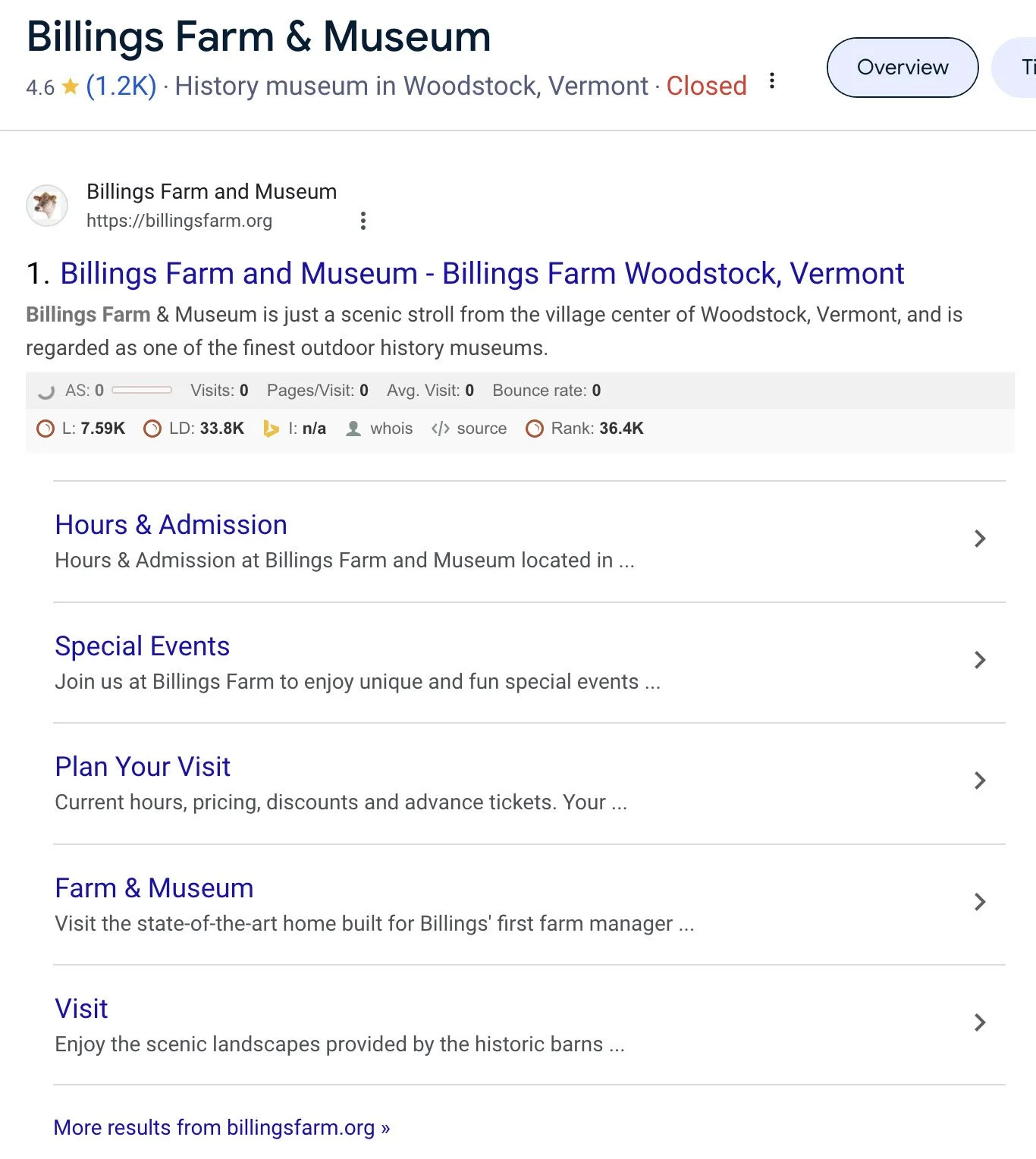
Snippets shown for the Billings Farm on Google: Hours, Special Events, etc
We achieve better E-E-A-T by consistently posting high-value content on our website, which can result in the following benefits:
Higher search engine rank: Google’s algorithm loves content that promotes your site’s E-E-A-T.
Increased page views: This would be time on page and click-throughs to other pages of your site.
Increased social shares and backlinks: People are more likely to share your site if it is viewed as valuable E-E-A-T material.
Featured snippets: Notice those sub listings at the top of a Google search? Those are called ‘snippets’. That’s where you’ll be, commanding attention over even the first sponsored ads, and in the case of a direct business name Googled, like the above Billings Farm example, above AI.
Break Down of E-E-A-T Principles
EXPERIENCE
The newest element of the E-E-A-T guidelines, experience, demonstrates that the author has first-hand experience in a subject.
EXAMPLE:
Which would you trust: a testimonial from someone who has personally used a product or service or a “review” by someone who has not?
EXPERTISE
You’re an expert in your field and have the chops to show your audience what you know by creating expert-level content. The goal is for your audience to see you as a trusted expert in your field and rely on you and your product or service. Become the go-to in your niche with the accurate content they’re looking for.
EXAMPLE:
A chef can explain the best way to cut onion without crying. How? They have the experience and expertise to demonstrate how to do it correctly, even if it’s just for someone looking to sharpen their knife skills.
AUTHORITATIVENESS
You establish authority when your content receives mentions within your field or niche. You want related websites with established authority in your industry promoting your content.
Other Google annointed experts linking to your content demonstrates how trusted your content is. It also shows that you deliver what your post and page headlines and title tags promise.
The more your content regularly earns backlinks and mentions on other sites, the more your content will be perceived as authoritative.
You also can’t have SEO success without authority. This, in turn, increases the authority of your domain.
While links are best, mentions in other articles or social media in your niche are also Google search gold.
EXAMPLE:
Are you a resource for a certain type of recipe content (think vegan, barbecue, baby food, chicken feed)? Have you been interviewed by news outlets, NOFA, podcasts, or other high-quality content websites on that topic? That’s Authoritativeness.
TRUSTWORTHINESS
Trustworthy, quality content is accurate, up to date, and flows well from the titles to the copy. Your website won’t rank as high on Google if your content lacks credibility.
Want a more trustworthy site? Fast load times and user-friendly navigation is a good start.
More quick tips to ensure your site is trustworthy:
Include whom to contact regarding site ownership.
Include your physical location (i.e., office, address, etc.).
Have a Privacy Policy or Terms and Conditions page accessible for users. You can park this page at the footer of your website. You can generate a typical or advanced policy at a number of websites, like this one from Termageddon.
Ensure site visitors you're a safe place to browse: "https://" is granted when an SSL (Secure Socket Layer) certificate is purchased for your domain name. SSL certificates are automatic for Squarespace sites - you can't have a website on Squarespace without it.
When providing expertise, cite (link to other authoritative websites) all sources when appropriate.
E-E-A-T In a nutshell
E-E-A-T is Google’s way of communicating what it considers to be “high-quality content”. While E-E-A-T is not part of Google’s algorithm or a ranking factor, it can still impact the performance of your content in SERPs.
Get nerdy about E-E-A-T: Google’s Search Quality Rater Guidelines
This whopping 172-page PDF document outlines everything, everything, that influences where your content appears in the Search Engine Results Pages, or SERPS (hah! Another acronym).